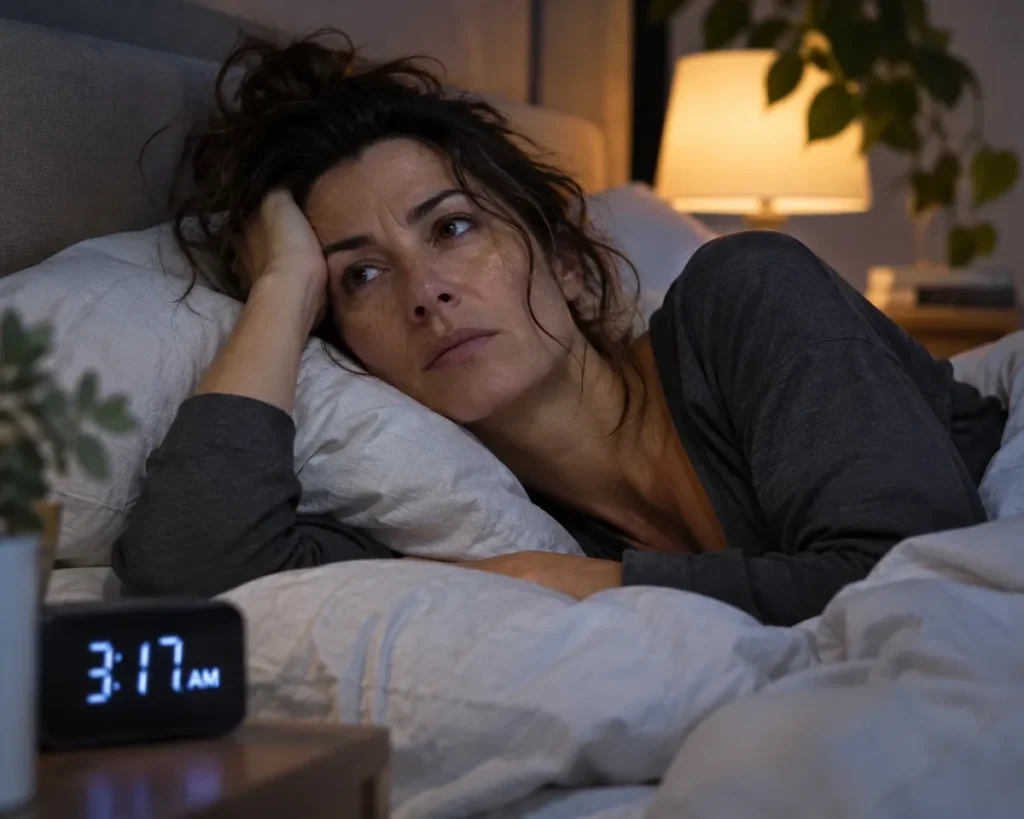
It’s 9 p.m. The day is finally over, and you’re standing in front of the open fridge, not really hungry. Ten minutes later the chips are gone, you feel worse than before, and you promise yourself that tomorrow will be different.
If you’re trying to figure out how to stop stress eating, another diet probably isn’t the answer. You aren’t eating because you lack information. You’re eating because food has become a way of coping. Below you’ll find why stress makes you reach for food, practical steps that help, and how hypnotherapy gives your mind a different kind of comfort.
What is stress eating?
Stress eating, often called emotional eating, means eating to change how you feel rather than because your body needs food. It helps to know the difference between the two kinds of hunger:
- Physical hunger builds slowly, can be satisfied by many foods, and stops when you’re full.
- Stress hunger arrives suddenly, wants something specific, usually sweet, salty or crunchy, and often ends in guilt.
You might recognize it if you eat when you’re not hungry, finish food without really tasting it, snack in secret, or find yourself in the kitchen after a hard phone call. For a few minutes, food really does help. That’s exactly why it’s so hard to give up.
Why do I eat when I'm stressed?
Part of the answer is in your body. Stress hormones can drive appetite, especially for sugary and fatty food. In one laboratory study, women whose bodies released more cortisol during stressful tasks ate more on that day than women with a smaller stress response, and they tended to choose sweeter food (Epel et al., 2001).
Long gaps between meals can add to this. When you skip breakfast or forget lunch on a busy day, your blood sugar drops, cravings for sweets get louder, and you become more easily rattled. By evening, you’re both stressed and running on empty.
The other part of the answer is what you learned. For many of us, food was love, reward and comfort from the very beginning: a cookie after a scraped knee, dessert for being good, a family that showed care through meals but didn’t talk about feelings. A child who had no one to turn to may have found that food was always there. It never left, never got angry and always helped a little.
Food can also take the place of something that’s missing. When someone tells me about a night of stress eating, the question I find most useful isn’t “What did you eat?” It’s “What did you need right then?” The answer is often rest, a break, company, or someone to say it’s okay.
Why willpower runs out at 9 p.m.
The kitchen at 9 p.m. is a good illustration of the Theory of Mind, a simple framework I rely on in hypnotherapy. “No more snacking after dinner” was your conscious mind talking. The automatic link between a hard feeling and the fridge belongs to your subconscious mind. This framework treats 12% of the mind as conscious and 88% as subconscious. Think of what that means at the end of a long day: your reasoning is tired, and the old program is not.
A diet speaks to the conscious mind, and stress eating lives in the subconscious. Lasting change comes when the two want the same thing.
How to stop stress eating: 6 practical steps
- Pause and rate your hunger. Before you eat, ask, “How hungry am I, from 0 to 10?” If it’s low, ask what you’re feeling instead. You’re still allowed to eat. You’re just choosing with your eyes open.
- Keep a short log. For a week or so, jot down what you ate, when, and how you felt. You don’t have to do this forever. It simply shows you where the pattern is strongest.
- Eat regular meals. Don’t let yourself get to the point of being starving. Meals with protein, and a planned snack if you need one, keep your body steadier so cravings have less to work with.
- Make a list of what else helps. Match it to the feeling. Tired: lie down for ten minutes. Lonely: call a friend. Tense: take a walk, stretch or drink a cup of tea. Overwhelmed: write it all down. Keep the list where you’ll see it, because the moment of craving isn’t the time to come up with ideas.
- Add a little friction. Keep trigger foods out of easy reach, put food on a plate, and sit down to eat. Small obstacles give your conscious mind a moment to catch up.
- Drop the “start over Monday.” Guilt is itself a stressor, and it often leads straight back to the kitchen. One evening of stress eating is only one evening. Harsh rules tend to make the rebound bigger.
If you’ve done all of this and still feel pulled toward food, it doesn’t mean you’re weak. It usually means the need underneath hasn’t been met yet.
How hypnotherapy helps you stop stress eating: healing the inner child
Most people who stress eat already know plenty about nutrition. What they need is a different way to feel better, one their subconscious will actually accept. That’s why a central part of my work on stress eating is healing the inner child.
Your inner child is the set of feelings, beliefs and comforting habits you formed when you were young, still held in your subconscious. When a hard moment comes, that younger part reaches for what worked back then. It isn’t being difficult. It’s looking after you the only way it learned. Hypnosis, a relaxed and focused state, gives you a way to reach it through imagery and suggestion.
What this work can look like:
- A calm anchor. We start by building a sense of calm and strength, along with a small gesture that brings it back, so that you have something to reach for that isn’t food. The work is gradual on purpose.
- Comfort from the adult you. When you’re ready, you meet your younger self in hypnosis and offer what food was standing in for: reassurance, attention and the sense that their feelings are allowed.
- Rehearsing your triggers. You picture the difficult call, the long day or the quiet evening, and see yourself feeling it, staying relaxed and choosing something else.
- Changing your relationship with food. Suggestions help you notice true hunger and fullness, and enjoy food without using it as a way out of your feelings.
This doesn’t mean reliving painful memories, and you don’t have to forgive anyone. If an old habit returns during a stressful week, that’s normal, and we simply reinforce the new response. Clients often tell me that the change they notice first isn’t about food at all. It’s that hard feelings stop being so frightening.
This kind of eating has been tested directly. In a randomized trial of 82 adults with obesity who tended to lose control of their eating in response to feelings and food cues, everyone received the same nutrition education, and one group also learned hypnosis and self-hypnosis. Eight months later, about two-thirds of the hypnosis group had brought that loss of control back into the normal range, compared with about one in ten in the education-only group (Delestre et al., 2022). Results vary, but it speaks directly to the pattern this article is about.
Hypnosis itself is well researched: a 2024 overview of 49 meta-analyses found that more than half of the reported effects were medium or large (Rosendahl et al., 2024).
When to get more support
Stress eating is common, and hypnotherapy is not a treatment for medical or mental health conditions. If you regularly eat large amounts and feel out of control, if you make yourself sick, restrict food severely or misuse laxatives, or if your eating is linked with trauma or depression, please reach out to a doctor or licensed mental health professional. Please also see your doctor if you often feel shaky, foggy or irritable between meals, or if you have diabetes or another medical condition that affects how you eat. If you’re having thoughts of harming yourself and you’re in the US, call or text 988 to reach the Suicide & Crisis Lifeline.
Quick answers
What’s the difference between stress eating and emotional eating?
Stress eating is a form of emotional eating. Emotional eating is the broader term and includes eating out of boredom, sadness, loneliness or even celebration.
How do I stop stress eating at night?
Eat enough during the day, plan something else for your usual snacking time, and give your evening a clear ending, like brushing your teeth or making a cup of tea. Nighttime eating is often about unwinding, so look for another way to do that.
Why do I crave sugar when I’m stressed?
Stress hormones and low blood sugar can both push you toward quick energy. Sweet food may also be an old emotional comfort from childhood.
Can hypnosis help with stress eating?
Many people find it helps, because it works with the subconscious, where the link between feelings and food lives. It works best alongside regular meals and the steps above.
One last thing
Stress eating isn’t a failure of character. Somewhere along the way, food became the most reliable comfort you had, and it did its best. You can learn another kind of comfort. I work with clients online, from San Francisco and around the world. If you’d like help, you can book a free 20–30 minute discovery call. You might also like my articles on hypnotherapy for weight loss, how to stop biting your nails and how to break a habit that keeps coming back.
Aycin Hypnotherapy provides hypnotherapy and self-improvement services. It does not diagnose or treat medical or mental health conditions and is not a substitute for care from a licensed professional. Results vary.